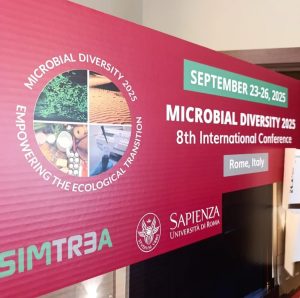
Conference: 8th International Conference on Microbial Diversity
Microbial Diversity for Empowering the Ecological Transition.
Conference Overview: 8th International Conference on Microbial Diversity
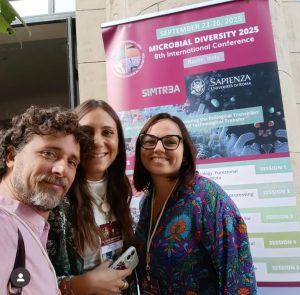
Microbial Diversity for Empowering the Ecological Transition: Research, Innovation, and Technological Transfer. September 23-26, 2025 – Sapienza University of Rome, Italy. The International Conference on Microbial Diversity is a biennial event organized by the Italian Society for Agricultural, Food and Environmental Microbiology (SIMTREA). SIMTREA encompasses a community of scientists, researchers, and experts working in microbiology and biotechnology within public and private research institutions and industry. It promotes the understanding of microbiology and its applications among a wide range of stakeholders, including policymakers, industry representatives, and academia.
Study 1: Microbial Analysis of Sant’Agostino Table Olives Flavored with Wild Fennel
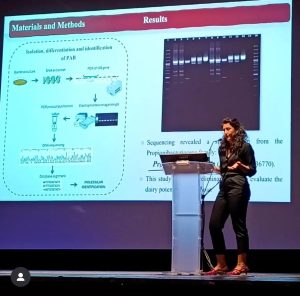
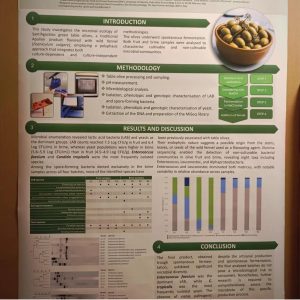
The first study presented, as a paper, a work titled “In-depth microbial analysis of Sant’Agostino table olives flavored with wild fennel (Foeniculum vulgare, 1768)”. This study explores the microbial ecology of Sant’Agostino green table olives, a traditional Apulian product flavored with wild fennel (Foeniculum vulgare), using a polyphasic approach that integrates culture-dependent and culture-independent methods. The integrated culture-dependent and culture-independent approach provided a comprehensive overview of microbial diversity, highlighting the potential of selected LAB and yeast strains for enhancing the quality of traditional fermented products.
Study 2: Yeast Adaptation During Early Alcoholic Fermentation under Low pH
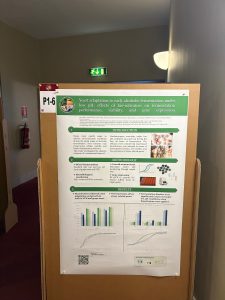
The second one, also presented as a poster, was titled “Yeast adaptation to early alcoholic fermentation under low pH: effects of bio-activators on fermentation performance, viability, and gene expression”. This study examined the early adaptation of Saccharomyces cerevisiae during the first 48 hours of alcoholic fermentation under standard and low pH conditions, assessing the effects of two commercial yeast-based bio-activators on fermentation kinetics, cell viability, and stress gene expression. Results showed that bio-activators promoted more robust fermentations under challenging conditions.