When science meets students: a MEDIET4ALL workshop at the Experimentarium
Students explore sustainable food packaging from fish by-products.
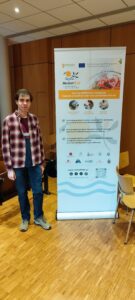
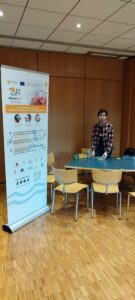
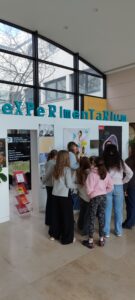
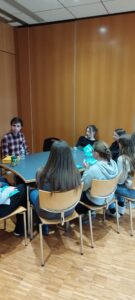
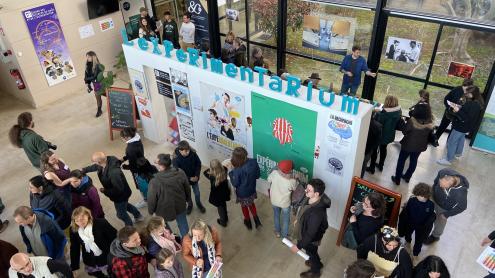
On 12 & 17 March, the laboratories of the Centre des Sciences du Goût et de l’Alimentation in Dijon hosted a special encounter between young researchers and students as part of L’Expérimentarium, a science outreach initiative led by Université Bourgogne Europe.
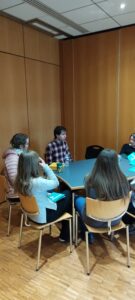
The aim of the programme is simple: bring research closer to the public by giving people the opportunity to meet scientists and discover their work through interactive discussions and demonstrations. On this occasion, 35 middle school students took part in the event and explored the world of scientific research firsthand.
Turning fish leftovers… into food packaging
Among the researchers present was Clément Poulain, a PhD student involved in the MEDIET4ALL project. His workshop focused on an unexpected topic: developing biodegradable food packaging.
In his research in food biotechnology, Clément is working on a challenge that concerns both the food industry and the environment: finding sustainable alternatives to conventional plastic packaging.
Packaging plays a key role in protecting food and reducing food waste. However, the plastics commonly used today are extremely resistant and can remain in the environment for decades.
A solution inspired by natural resources
To develop greener alternatives, Clément explores natural raw materials, particularly those derived from food by-products. One promising idea is to use gelatin extracted from fish leftovers to create a thin protective layer that can improve biodegradable packaging.
His work involves testing different natural ingredients to design materials that can:
limit the passage of moisture and air,
remain strong and stable,
and effectively extend the shelf life of food products.
During the workshop, students discovered how researchers experiment with different formulations, test the resistance of new materials, and evaluate whether these innovative packaging solutions could help preserve food for longer.
Making research accessible
Through demonstrations, discussions and a few humorous moments — including Clément’s favourite anecdote: “When I say I work on plastics, people sometimes look at me strangely… until I start eating them!” — the students experienced science in a lively and engaging way.
This workshop, organised by Vitagora and Université Bourgogne Europe within the framework of the MEDIET4ALL project, highlights the importance of connecting science with society and sharing research beyond laboratories.
And who knows — among these curious students may well be the scientists and innovators of tomorrow.