
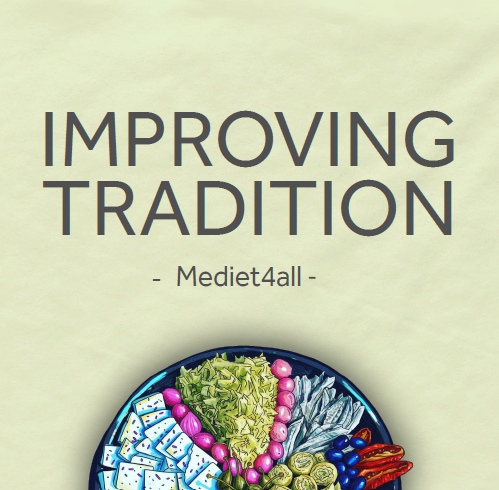
Revisiting Mediterranean traditional recipes through science: the Microtarians experience in Mediet4All
Traditional Mediterranean recipes revisited with fermentation and scientific innovation in the Mediet4All project.
The Mediterranean diet is widely recognised as one of the healthiest and most sustainable dietary patterns in the world. Beyond a simple list of ingredients, it represents a way of living that combines culinary traditions, seasonal products, and shared meals.
However, modern lifestyles are increasingly challenging these traditions. Busy schedules, limited time for cooking, and the complexity of some traditional preparations can make it difficult for many people to maintain these practices in their daily lives.
Within the Mediet4All project, partners are working to promote and adapt Mediterranean dietary heritage to contemporary lifestyles. One initiative was led by Microtarians SIS, who explored how traditional Mediterranean recipes could be reinterpreted using modern scientific knowledge while preserving their cultural and nutritional value.
The result is a collection of revisited recipes that combine culinary heritage, fermentation science, and practical preparation methods adapted to today’s lifestyles.
Why revisit traditional Mediterranean recipes?
Mediterranean cuisine has been shaped over centuries by local ingredients, traditional techniques, and cultural exchange across the region. Many iconic dishes rely on slow cooking, fermentation, or multi-step preparation methods that reflect both patience and craftsmanship.
Yet these traditional practices can sometimes appear difficult to reproduce in everyday life. Long preparation times, complex techniques, and limited understanding of the biological processes behind certain foods may discourage people from cooking them regularly.
Microtarians therefore set out to answer a key question: how can traditional Mediterranean recipes be adapted to modern lifestyles without losing their authenticity and nutritional value?
The invisible allies of Mediterranean cuisine: microorganisms
One of the most fascinating aspects of traditional food cultures is the role played by microorganisms. Long before modern science could explain them, bacteria and other microorganisms were already essential to many Mediterranean culinary traditions.
Fermented foods such as vegetables, doughs, or dairy products rely on beneficial microorganisms that help transform ingredients. These natural processes can improve flavour, extend shelf life, and enhance nutritional properties.
Today, scientific research confirms that fermentation and microbial activity can support gut health and improve nutrient availability. By better understanding these processes, it becomes possible to use them intentionally in modern cooking.
Within the Mediet4All project, Microtarians explored how these “invisible helpers” could simplify food preparation while maintaining the richness and authenticity of Mediterranean cuisine.
Experimenting with new approaches to traditional dishes
To explore these ideas, Microtarians worked together with chefs and nutritionists to experiment with new approaches to traditional recipes. The objective was not to replace culinary traditions but to reinterpret them using both ancestral knowledge and contemporary science.
The team carefully analysed ingredients, their combinations, and the microbial dimension of meals. Several strategies were explored:
simplifying preparation steps
reducing unnecessary cooking or heating
integrating fermentation processes
allowing beneficial microorganisms to play a greater role in food transformation
This approach makes it possible to create recipes that are easier to prepare at home while preserving flavour, nutritional value, and cultural identity.
From traditional recipes to modern interpretations
Through this experimentation, several well-known Mediterranean dishes were revisited and transformed into new culinary interpretations.
For example:
a traditional lentil soup inspired the creation of plant-based lentil burgers
Moroccan couscous was reinterpreted into vibrant bowls combining fermented couscous, vegetables and lamb
the spirit of moussaka inspired fermented and preserved eggplant preparations
pizza dough techniques were adapted using long fermentation processes
a classic plum tart was transformed into lighter layered dessert verrines with yoghurt and fresh fruit
Each reinterpretation illustrates how traditional recipes can evolve while keeping their cultural roots and flavours.
Beyond nutrition: food as a moment of connection
Mediterranean cuisine has always been about more than nourishment. Meals play a central role in social life, bringing families and communities together around the table.
One of the ideas behind the Microtarians approach is that simplifying cooking methods can actually help restore this social dimension of food. When preparation becomes more intuitive and less time-consuming, people may spend less time in the kitchen and more time sharing meals, conversations, and experiences with others.
In this sense, innovation does not replace tradition. Instead, it helps ensure that the Mediterranean food culture continues to thrive in contemporary societies.
Discover the recipe collection
The work carried out within the Mediet4All project resulted in a collection of revisited recipes that combine traditional inspiration with modern scientific insights.
The recipe booklet showcases these culinary experiments and provides practical ideas for bringing Mediterranean food culture into everyday cooking.
👉 Discover and download the recipe collection: https://mediet4all.eu/wp-content/uploads/2026/03/Mediet4All_Ebook-12_2005.pdf
👉 Download the press release: https://mediet4all.eu/wp-content/uploads/2026/06/E-Book-1-Press-Release-Mediteranean-recipes-.pdf