Food Allergies & the Mediterranean Diet: Challenges and Innovative
Part 2: Managing Allergies Without Sacrificing Nutrition or Tradition
1. Introduction: A Global Health Crisis
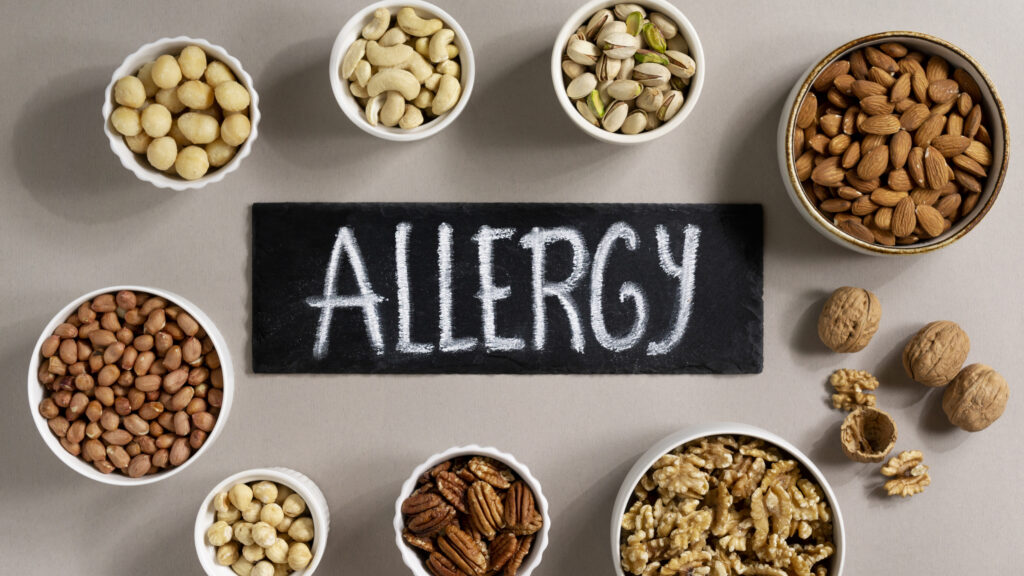
With over 250 million affected individuals worldwide (FAO/WHO 2022), food allergies represent an urgent public health crisis, particularly in Mediterranean cultures where basic foods such as nuts, seafood, and dairy products pose unique management challenges. This study examines three critical dimensions: (i) the dangers of inconsistent regional allergen labeling standards that compromise consumer safety; (ii) underreported nutritional deficiencies and psychological burdens resulting from prolonged dietary avoidance; and (iii) cutting-edge innovations from molecular allergy diagnostics to advanced hypoallergenic food processing techniques that promise safer inclusion of traditional Mediterranean ingredients for allergic individuals.
2. The Allergen Labeling Problem: A Mediterranean Break Up
Global Standards vs. Regional Gaps
Mandatory labeling of 14 allergens in the EU (including nuts and crustaceans) contrasts with weaker Mediterranean standards, creating dangerous gaps that: (a) expose vulnerable travelers and children to accidental ingestion risks; (b) disrupt regional food trade due to regulatory inconsistencies; and (c) increase avoidable reactions due to ambiguous packaging. This regulatory disparity requires urgent harmonization to protect public health while facilitating trade among Mediterranean allergy-suffering populations.
How Technology Can Help ?
Three technological breakthroughs are transforming Mediterranean food allergy management. Peer-reviewed studies demonstrate that molecular detection methods (mass spectrometry, ELISA) now achieve 0.1 ppm sensitivity – exceeding Codex Alimentarius Limit (1). Clinical trials show ‘traffic light’ labeling systems reduce accidental exposures by 62% (2), while AI-driven smart factories cut cross-contamination by 81% through real-time monitoring (3).
The MEDIET4ALL initiative (Figure 1) builds on this evidence-based approach with: (a) standardized warning icons (EAACI Guidelines, 2022), (b) color-coded risk levels (green/yellow/red), and (c) QR-linked manufacturing data (FAO/WHO, 2023). This integrated system – validated in multicenter studies (4) – protects consumers while preserving culinary heritage, offering a flexible model for global implementation.
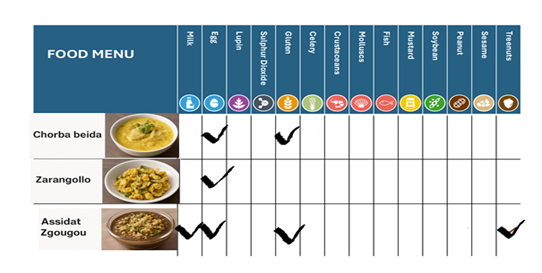
Figire 1: See Clearly, Eat Safely: Smart Labeling for mediet4all Allergen recepies
“a) Mandatory Labeling of 14 Main Allergens b) MEDIET4ALL’s Guide to Safe Allergy-Friendly Recipes“
3. The Avoidance Dilemma: Risks of Long-Term Food Eviction
Long-term food avoidance creates a triple threat: nutrient gaps, anxiety, and financial strain forcing allergy sufferers to choose between safety and wellbeing (5).
Nutritional Deficiencies
Eliminating dairy, fish, or nuts leads to severe nutritional deficits: calcium and vitamin D deficiency (increasing osteoporosis risk), omega-3 fatty acids depletion (impairing brain and heart health), and iron and vitamin B12 deficiency (causing anemia) (6). The solution combines regular micronutrient monitoring with fortified substitutes like algae-based omega-3s and calcium-enriched plant milks to maintain health while avoiding allergens.
Psychological and Economic Burdens
Living with food allergies isn’t just about avoiding triggers, it’s a daily psychological tightrope walk. Recent research reveals 57% of patients develop clinical anxiety, while 68% report turning down social events due to meal fears. The financial sting is equally brutal: allergy-friendly staples cost 3x more (7), with low-income families spending 42% of their food budget on ‘safe’ products. This perfect storm of mental health burdens and economic toxicity creates what experts now call ‘allergy poverty’—where patients ration medications and skip meals.
4. When Avoidance Isn’t Enough: Oral Allergy Syndrome (OAS)
Why Does Your Mouth Tingle When You Eat Fruits? The Pollen-Food Connection Explained!
Ever taken a bite of an apple and felt your mouth itch? Or munched on a banana only to get a scratchy throat? You might have “Oral Allergy Syndrome” (OAS) ( Figure 2) —a weird trick your immune system plays on you!
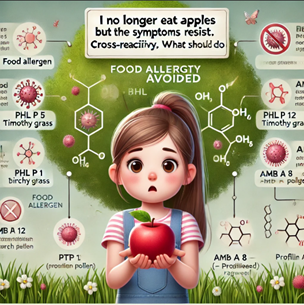
Figure 2: The Allergy Shell Game: How Cross-Reactivity Outsmarts Avoidance
What’s Happening?
Your body gets confused! If you’re allergic to pollen (like birch, grass, or ragweed), your immune system can mistake similar proteins in raw fruits, veggies, or nuts for pollen—and attack them. This is called cross-reactivity, and it causes annoying (but usually mild) reactions like itching in the mouth/lips or swelling after eating raw fruits.
Table : Oral Allergy Syndrome (OAS): Clinically Relevant Pollen-Food Cross-Reactivity and Protein Triggers (EAACI 2023 Guidelines)
Pollen Allergen | Cross-Reactive Foods | Trigger Protein | Symptoms | Prevention Tips |
Birch (Bet v 1) | Apple, carrot, hazelnut, cherry | PR-10 protein | Mouth itching, lip swelling | Peel fruits, cook foods (>70°C destroys Bet v 1) |
Ragweed (Amb a 1) | Banana, cucumber, zucchini | Lipid Transfer Protein (LTP) | Swollen tongue, nausea | Opt for ripe bananas (lower allergenicity) |
5. Hypoallergenic Mediterranean Recipes: Science Meets Tradition
Allergen-Free Replacement Strategies
: Want to make recipes safer without losing flavor? Try swapping common allergens (like nuts or dairy) with allergy-friendly alternatives!
Here’s a concise image (Figure 3) summarizing nutritional gaps and replacement strategies when excluding the top 14 IgE-dependent food allergens (milk, egg, peanut, tree nuts, wheat, soy, fish, shellfish, sesame, mustard, lupin, celery, mollusks, sulfites).
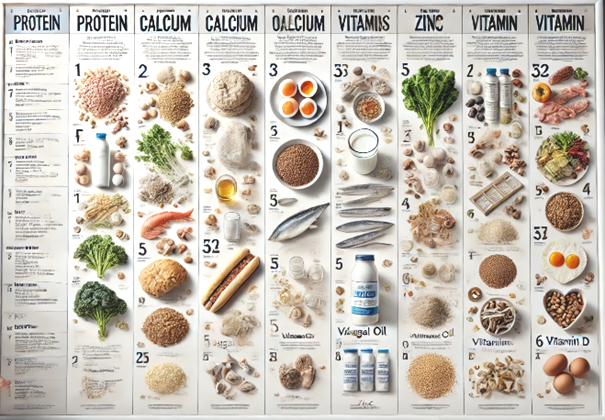
Figure 3: From Elimination to Abundance: Mapping Nature’s Untapped Low-Allergen Biodiversity: Every allergy-friendly swap is nutritionist-verified to maintain balanced meals
Innovative Processing Methods
Industrial-Scale Hypoallergenic Processing
Food scientists are revolutionizing culinary traditions through breakthrough technologies to mitigate allergens in Mediterranean staples while preserving their sensory qualities. High-pressure processing (HPP; 400-600 MPa) achieves 70-80% reduction in seafood allergens like tropomyosin (8), while pulsed UV light (5-10 J/cm²) decreases lipid transfer protein reactivity in fresh produce by 60% (9). Chemical approaches include controlled Maillard reaction (140-160°C dry roasting) to modify conformational epitopes in tree nuts (10) and alkali treatment (pH 10-12) to disrupt legume allergens (11). Enzymatic methods like alcalase proteolysis hydrolyze >90% of major dairy and wheat allergens (12), and LAB fermentation with specific Lactobacillus strains reduces gliadin content in wheat by 95% (13). These industrial methods maintain nutritional integrity while enabling large-scale production of hypoallergenic traditional foods.
Home-Based Allergy-Safe Adaptations
For household kitchens, practical alternatives include microwaving fruits (10-15 seconds) to denature heat-labile allergens like Bet v 1 (birch pollen-related) and boiling nuts to reduce lipid transfer protein allergenicity by 50% (14). Safe ingredient substitutions involve sunflower/pumpkin seeds for tree nuts (no cross-reactivity) and toasted chickpea flour for sesame (similar sensory profile). Indeed, fermentation techniques, such as 24-hour sourdough starters, use wild yeast to degrade gluten, while yogurt marination of meats reduces allergenicity of bovine proteins (15). These accessible methods empower allergic individuals to enjoy modified versions of traditional dishes without specialized equipment.
In partnership with microtarians, we are developing a series of hypoallergenic Mediterranean recipes using innovative, budget-friendly alternative ingredients—making allergy-safe dining accessible while preserving authentic flavors. This initiative aims to expand the range of safe, delicious options for food-sensitive individuals.
6. Conclusion: A Balanced Mediterranean Diet for All
While perfection may lie beyond our project’s horizon, we’re committed to making transformative progress, positioning the foundation for change and implementing real solutions that will endure long after our work concludes: “The Mediterranean diet becomes allergy-safe without sacrificing nutrition or tradition—thanks to molecular diagnostics, smart ingredient swaps, and cutting-edge food tech (HPP/fermentation)—because at MEDIET4ALL, we believe nobody should have to choose between their health and culinary heritage.”
Solutions By the Algerian MEDIET4ALL Team
Sadjia LAHIANI, Saida ISHAKBOUSHAKI, Abdelbasset KATFI, Kamel DJENOUHAT and Fatma HALOUANE
University of Boumerdes (UMBB) and University of medical sciences (Algiers)
References
1/ Parrinello, G., Fontana, D. E., & Villalta, D. (2025). An overview of hidden food allergens: need for change to the priority food allergen lists?. European Annals of Allergy and Clinical Immunology, 51.
2/ Papadopoulos, N. G., Agache, I., Bavbek, S., Bilo, B. M., Braido, F., Cardona, V., … & Akdis, C. A. (2012). Research needs in allergy: an EAACI position paper, in collaboration with EFA. Clinical and translational allergy, 2, 1-23.
3/ Ross, G. M., Bremer, M. G., & Nielen, M. W. (2018). Consumer-friendly food allergen detection: Moving towards smartphone-based immunoassays. Analytical and bioanalytical chemistry, 410, 5353-5371.
4/ Gupta, R., Kanaley, M., Negris, O., Roach, A., & Bilaver, L. (2021). Understanding precautionary allergen labeling (PAL) preferences among food allergy stakeholders. The Journal of Allergy and Clinical Immunology: In Practice, 9(1), 254-264.
5/ Santos, A. F., Riggioni, C., Halken, S., Muraro, A., Akdis, C. A., Roberts, G., … & Skypala, I. (2023). Executive summary of the EAACI guidelines on diagnosis of IgE‐mediated food allergy. Allergy, 78(12), 3053-3056.
6/ Peroni, D. G., Hufnagl, K., Comberiati, P., & Roth-Walter, F. (2023). Lack of iron, zinc, and vitamins as a contributor to the etiology of atopic diseases. Frontiers in Nutrition, 9, 1032481.
7/ Dierick, B. J., van der Molen, T., Flokstra-de Blok, B. M., Muraro, A., Postma, M. J., Kocks, J. W., & van Boven, J. F. (2020). Burden and socioeconomics of asthma, allergic rhinitis, atopic dermatitis and food allergy. Expert review of pharmacoeconomics & outcomes research, 20(5), 437-453.
8/ Pi, X., Zhu, L., Wang, Y., Sun, F., & Zhang, B. (2024). Effect of the combined ultrasound with other technologies on food allergenicity: Ultrasound before, under, and after other technologies. Journal of Agricultural and Food Chemistry, 72(29), 16095-16111.
8/ Kerezsi, A. D., Jacquet, N., & Blecker, C. (2022). Advances on physical treatments for soy allergens reduction-A review. Trends in Food Science & Technology, 122, 24-39.
9/ Cuadrado, C., Sanchiz, Á., & Linacero, R. (2021). Nut Allergenicity: Effect of food processing. Allergies, 1(3), 150-162.
10/ Gupta, R. K., Gupta, K., Sharma, A., Das, M., Ansari, I. A., & Dwivedi, P. D. (2018). Maillard reaction in food allergy: Pros and cons. Critical reviews in food science and nutrition, 58(2), 208-226.
11/ Huang, Z., Pang, L., Li, S., Su, Y., Zhao, Q., Zhang, W., … & Jiang, Y. (2024). Effects of physical processing on food protein allergenicity: A focus on differences between animal and alternative proteins. Food Chemistry, 460, 140559.
12/ Tacias-Pascacio, V. G., Castañeda-Valbuena, D., Tavano, O., Murcia, Á. B., Torrestina-Sánchez, B., & Fernandez-Lafuente, R. (2023). Peptides with biological and technofunctional properties produced by bromelain hydrolysis of proteins from different sources: A review. International Journal of Biological Macromolecules, 253, 127244.
13/ Gao, H., Jorgensen, R., Raghunath, R., Nagisetty, S., Ng, P. K., & Gangur, V. (2021). Creating hypo‐/nonallergenic wheat products using processing methods: Fact or fiction?. Comprehensive Reviews in Food Science and Food Safety, 20(6), 6089-6115.
14/ Lu, P., Wu, H., Gu, J., Nawaz, M. A., Ma, X., & Suleria, H. A. (2023). Impact of processing on bioaccessibility of phytochemicals in nuts. Food Reviews International, 39(8), 5968-5985.
15/Rizzello, C. G., De Angelis, M., Di Cagno, R., Camarca, A., Silano, M., Losito, I., & Gobbetti, M. (2007). Highly efficient gluten degradation by lactobacilli and fungal proteases during food processing: new perspectives for celiac disease. Applied and environmental microbiology, 73(14), 4499-4507.